

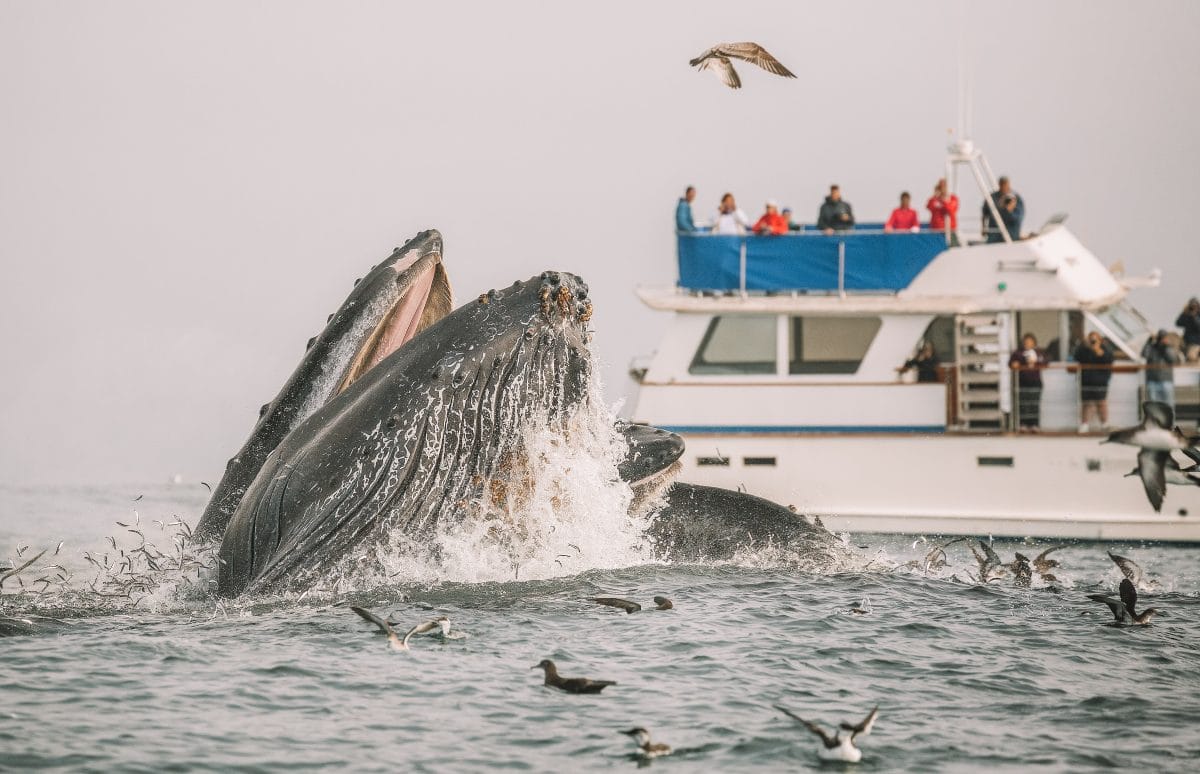
Quick answer
Dress in three flexible layers: a moisture-wicking base, an insulating mid-layer, and a windproof, water-resistant outer shell, plus closed-toe shoes. Monterey Bay runs cold and breezy even in summer, so add a secured hat and sunglasses. Booking a morning departure in the 07:30–09:30 window usually means calmer seas and less spray to plan around.
Monterey Bay drops into a submarine canyon deeper than the Grand Canyon, and that trench funnels cold, nutrient-rich water toward the coast. This is the quiet catch behind what to wear whale watching monterey: the temperature on the boat rarely matches the temperature on land. The marine layer, the steady Pacific wind, and fine sea spray combine into a wind-chill that summer clothing ignores. Boats move at speed, so even a mild breeze turns sharp once the harbor is behind them. The bay's morning conditions tend to be calmer, which is why an early Monterey Bay whale watching trip usually means less spray and steadier footing than an afternoon sailing. The practical takeaway is less about fashion and more about physics. Anything that traps warmth and blocks wind will outperform a single heavy coat, because conditions shift between the sheltered harbor and the open water where the whales feed. Closed, grippy shoes matter on a wet, moving deck, and hands stay busier than expected with railings, cameras and binoculars. Sunglasses cut the glare bouncing off the surface, and a secured hat survives the gusts that claim loose ones. None of this should complicate a Monterey whale watching tour. The gear is ordinary; the sequencing is what counts, and the site's dedicated sections break down the checklist, the timing and the boarding logistics in detail. Readers deciding what to wear whale watching monterey do best by treating the outing as a short marine expedition rather than a harbor stroll, then reserving a departure through the booking pages once the day's forecast is clear. Dressing for the water, not the wharf, is the difference between watching the whales and counting the minutes until the dock reappears.
“Dress for the water, not the wharf — the boat is a short marine expedition, not a harbor stroll.”
A Checklist of What to Wear Whale Watching Monterey
-
Book your tour online in advance — Morning departures fill early, so reserve a spot before you travel.
-
Bring photo ID and booking confirmation — Staff match your name to the reservation at check-in.
-
Pack a windproof waterproof shell — Open-water spray and wind cut through ordinary jackets on the bay.
-
Add warm mid-layers — Water temperatures keep the deck cool even on bright days.
-
Wear closed flat-soled shoes — Wet decks get slick, and grip matters more than style.
-
Carry sunscreen, sunglasses, and a hat — Glare off the water reaches skin the sky doesn't.
-
Charge your phone or camera — Sightings happen fast, so fully charged batteries and storage help.
-
Aim to arrive by 07:30–09:30 — Calmer morning wind and sea conditions improve wildlife viewing.
How to Layer: What to Wear Whale Watching Monterey Step by Step
Layering for a Monterey Bay whale watching trip takes about ten minutes to assemble before you leave, and it keeps you comfortable through shifting temperatures on the water. Work from the skin outward so each layer does its job without bulk.
Start with a base layer
Pull on a snug synthetic or merino top and bottom that wick moisture off your skin. Skip cotton here, because it holds sweat and sea spray and leaves you chilled once the wind picks up.
Add an insulating mid-layer
Layer a fleece or light wool sweater over the base to trap body heat. People often overload this layer and overheat while the boat is still docked, so keep it moderate and adjustable.
Put on a wind-resistant outer shell
Top everything with a waterproof, wind-resistant jacket that blocks spray and gusts on open water. Choose one that zips fully and has a hood, since the deck offers little shelter from wind.
Secure your feet and hands
Wear closed, non-slip shoes and stash gloves and a warm hat in your pockets. Wet decks get slick, and sandals leave you unsteady when the boat rolls.
Anchor loose gear before boarding
Zip phones, sunglasses, and keys into secured pockets or a small bag with a closure. Loose items slide off benches or blow overboard once the boat leaves the wharf.
Test your range of motion
Move your arms and sit down to confirm layers let you reach, grip rails, and adjust as conditions change. Restrictive layering makes it hard to steady yourself and follow wildlife.
Seasonal Weather Guide: What to Wear Whale Watching Monterey
The best time to go whale watching in Monterey is during the fall months of September and October, boarding in the morning between 07:30 and 09:30. This window combines the calmest ocean conditions with the warmest, clearest seasonal weather of the year.
Summer (June to August)
High tourist volume55–65°F coastal fog, cold marine layer
Heavy offshore fog makes the bay feel 10 to 15 degrees colder than land. Thick insulating layers and a windproof shell are necessary to block the damp, chilly air.
Winter (December to February)
Moderate weekend attendance45–58°F, crisp winds and rain
Winter storms bring cold offshore winds and occasional rain. You need heavy thermal layers, a waterproof outer jacket, gloves, and a warm beanie to withstand the damp cold.
Fall (September to October)
Low to moderate weekday attendance50–70°F, sunnier and milder
Milder air and clearer skies make this the warmest season on the water. A light jacket over a sweater is usually sufficient, though early mornings remain brisk.
Weekday mornings
Fewer passengers on board—
Early trips boarding during the 07:30–09:30 window offer the calmest seas but are the coldest. Wear your heaviest base layers to counter the dense morning mist.
Verdict: Choose a Tuesday or Wednesday morning during September or October, boarding between 07:30 and 09:30, to secure the calmest water, lightest crowds, and warmest temperatures.
Clothing Mistakes: What to Wear Whale Watching Monterey
A few clothing choices separate a comfortable trip from a miserable one.
Wearing cotton base layers next to the skin
Cotton holds spray and sweat, then chills you for hours. Choose wool or synthetic fabrics that stay warm when damp.
Dressing for the warm dock, not the open water
Air offshore feels much colder than at the wharf. Add a windproof outer shell and expect a 10-plus degree drop on the water.
Wearing sandals, heels, or smooth-soled shoes
Wet decks get slick and unstable. Wear closed-toe, flat, rubber-soled shoes with grip.
Forgetting a hat, gloves, and ear protection
Wind chill hits exposed ears and hands hardest. Bring a snug beanie that covers the ears plus light gloves.
Skipping sunglasses and sunscreen on a gray day
Glare and UV reflect off the water even under cloud cover. Pack polarized sunglasses and apply sunscreen before boarding.
Overpacking loose scarves or wide-brim hats
Gusts strip away anything that isn't secured. Pick fitted gear with chin straps or drawcords.
Common Misconceptions About Monterey Whale Watching Attire
Misunderstandings about vessel size and seasonal weather frequently result in shivering passengers on deck.
MythSummer weather on the Monterey shore guarantees warm conditions out on the water.
FactOcean temperatures in the bay hover around 50 to 55 degrees Fahrenheit year-round. Marine winds create a strong chill factor, meaning thick outerwear is necessary even in July and August.
MythLarge whale watching vessels completely shield passengers from wind and ocean spray.
FactDrafts sweep across the open decks, and sea spray can reach passengers standing near the railings. A windproof, water-resistant outer shell protects your inner clothing from getting damp and cold.
MythStandard sandals or flip-flops are safe footwear for a calm day at sea.
FactBoat decks quickly become wet and slick from mist, spray, and condensation. Closed-toe shoes with non-slip rubber soles are necessary to maintain traction and prevent stubbed toes on deck fittings.
Where to Dine and Warm Up After Monterey Bay Whale Watching
Travelers can opt for classic warm clam chowder right by the docks or walk a few blocks inland to find local, budget-friendly alternatives.
Old Fisherman's Grotto
$20–$45restaurant
It offers heated indoor seating with views of the harbor.
Dock Side Fish Market
$10–$20market
Guests can take meals to nearby outdoor picnic tables along the recreation trail.
El Charrito Express
$7–$15street
Located a few blocks inland at 483 Calle Principal, this local takeout favorite operates during the daytime out of Alejandro's restaurant. It provides affordable, handmade flour tortilla burritos filled with options like chile verde to warm up away from wharf prices.
Check availability
FAQ on what to wear whale watching monterey
Everything you need to know about what to wear whale watching monterey